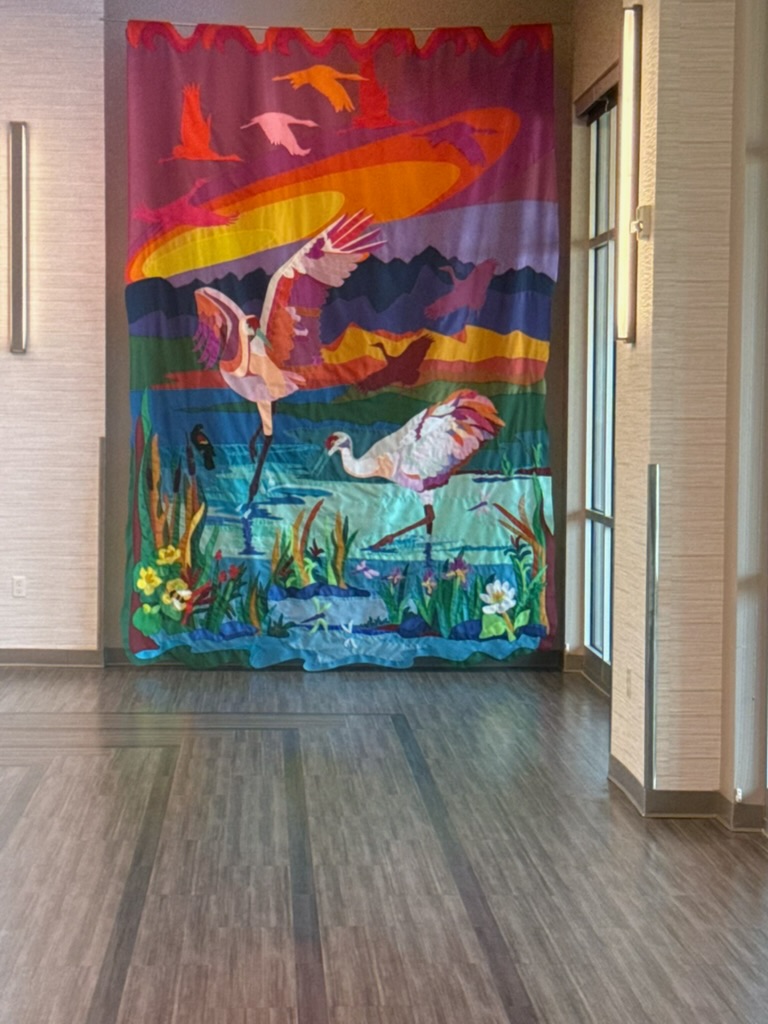
My work begins with an idea for a particular place. I think about the architecture, how people move
through the space, where the light comes from and, most importantly, how the fabric will live there. I am
not designing something simply to hang on a wall. I am designing for light, air and movement.
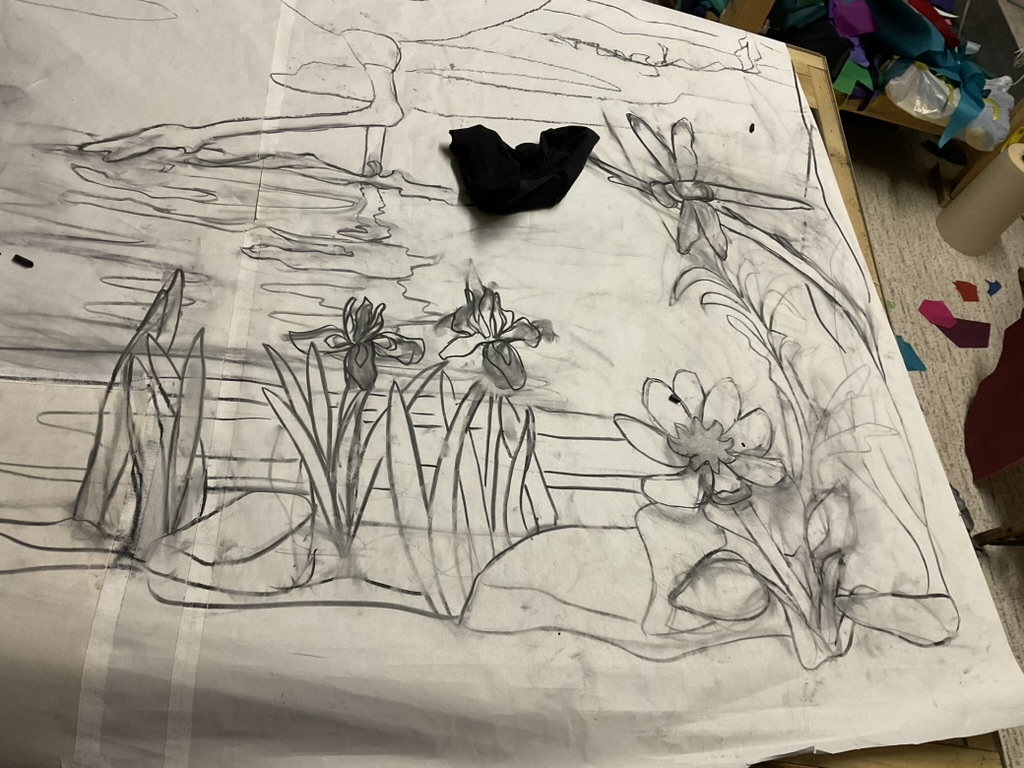
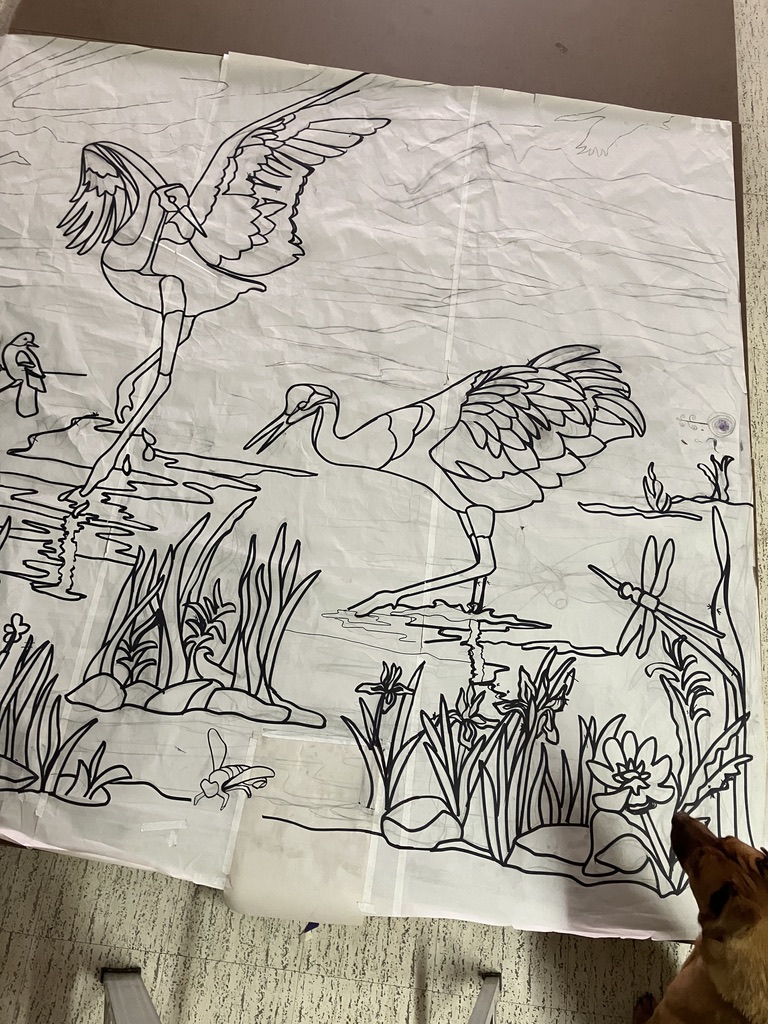
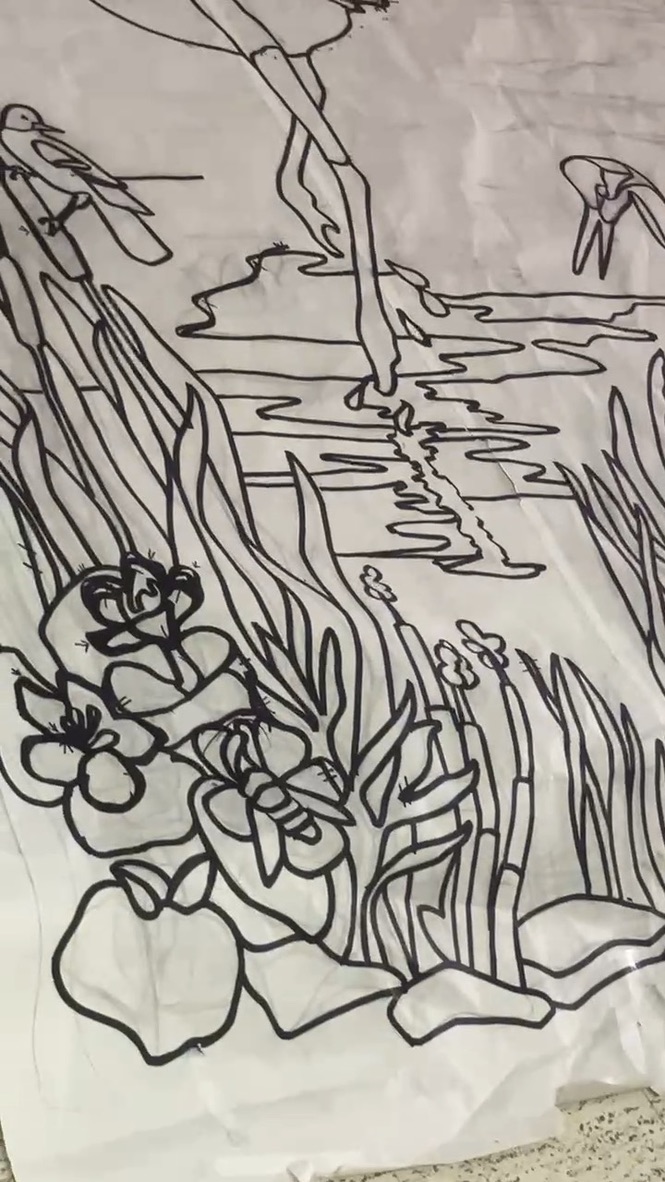
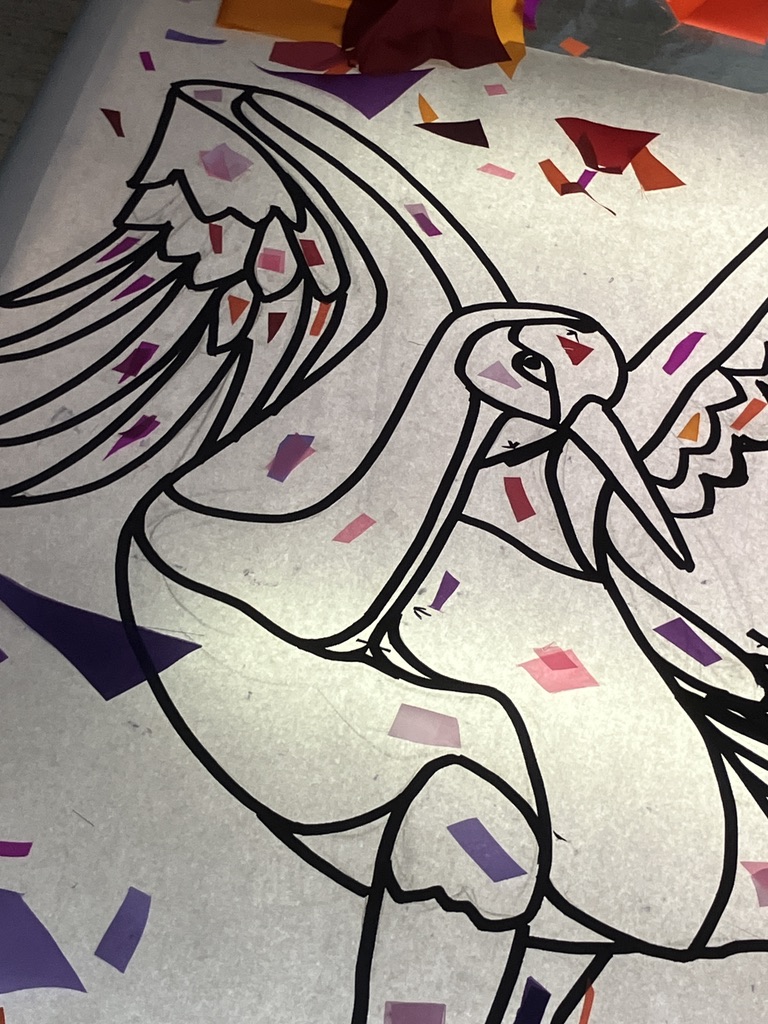
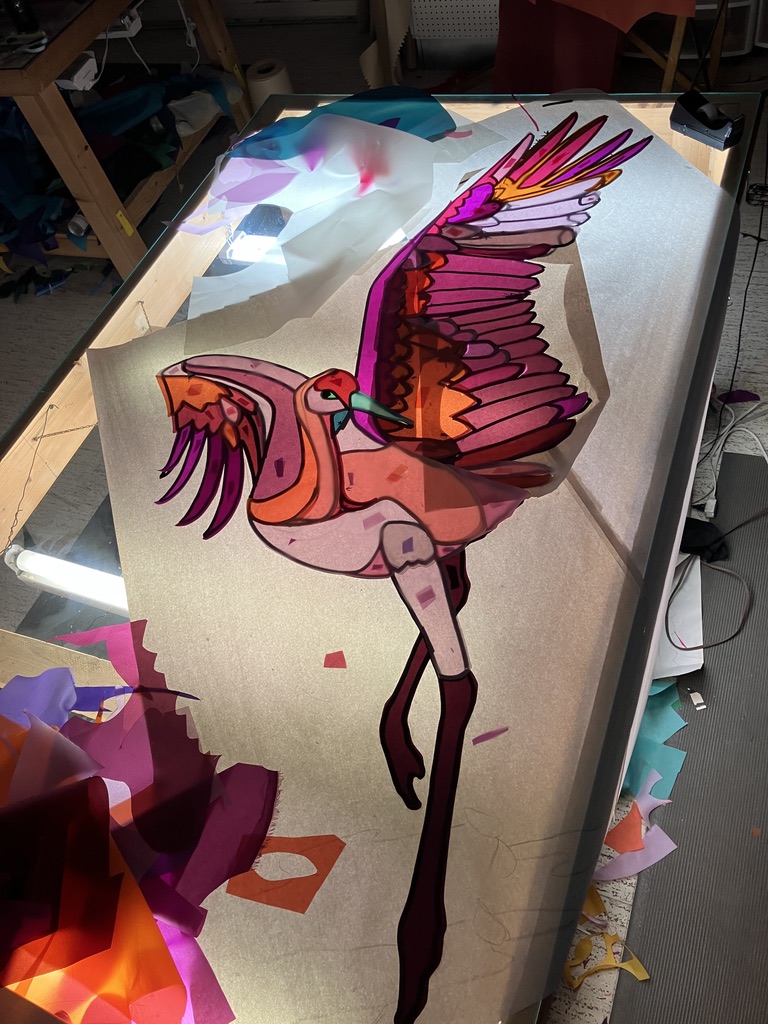
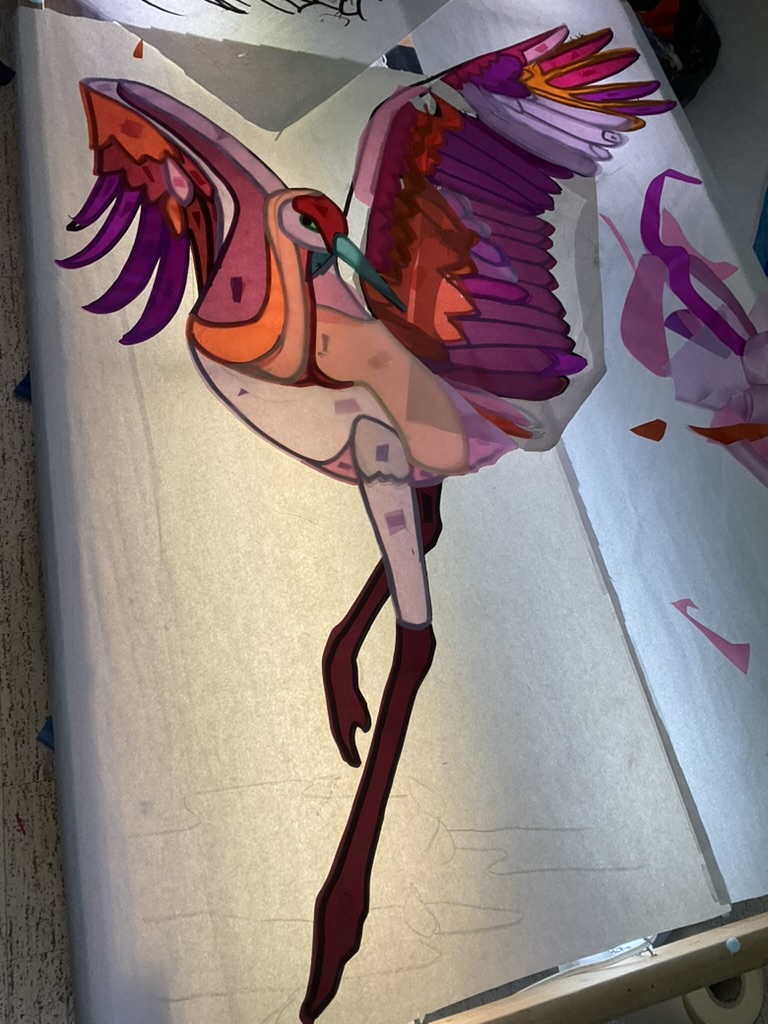
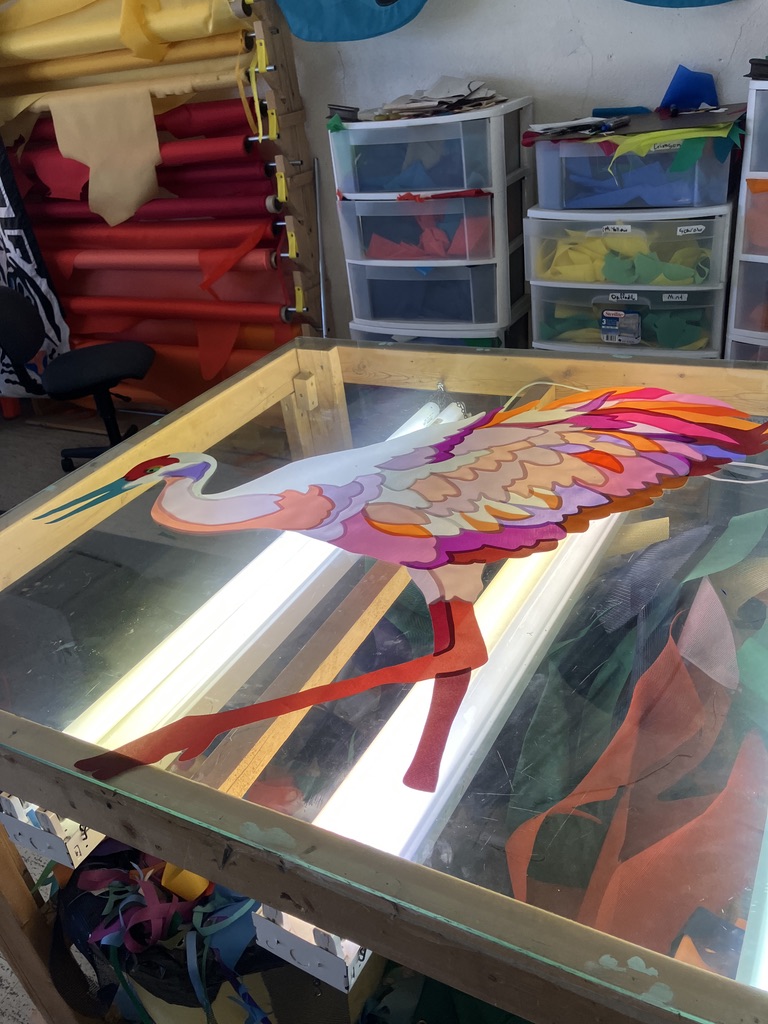
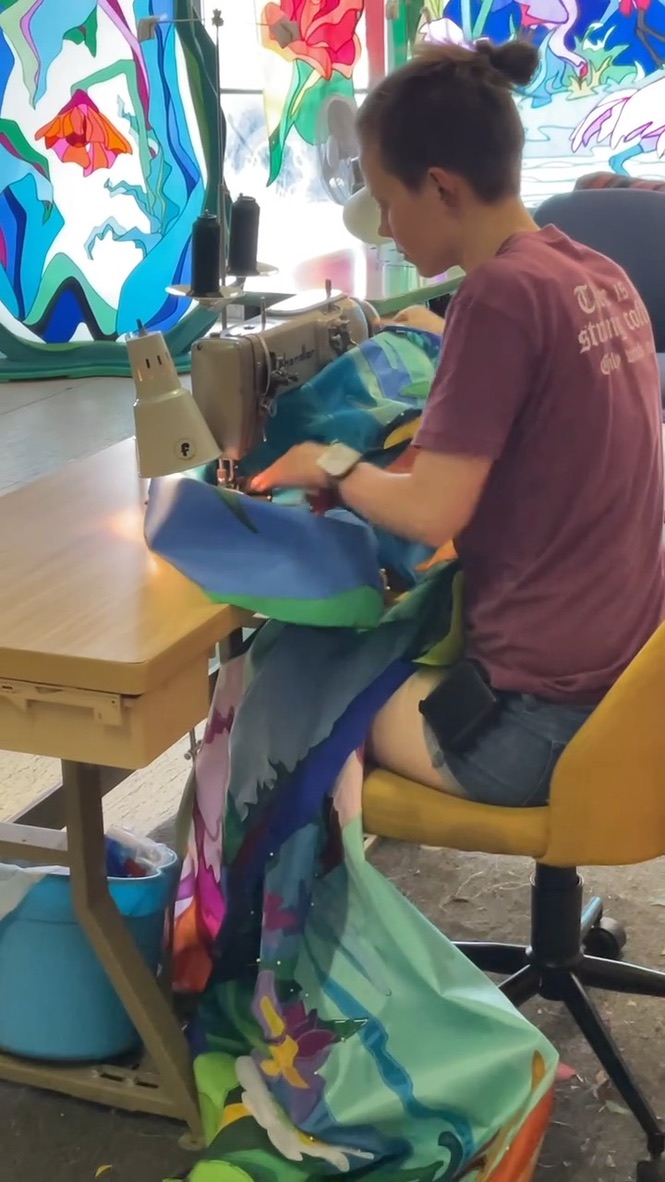
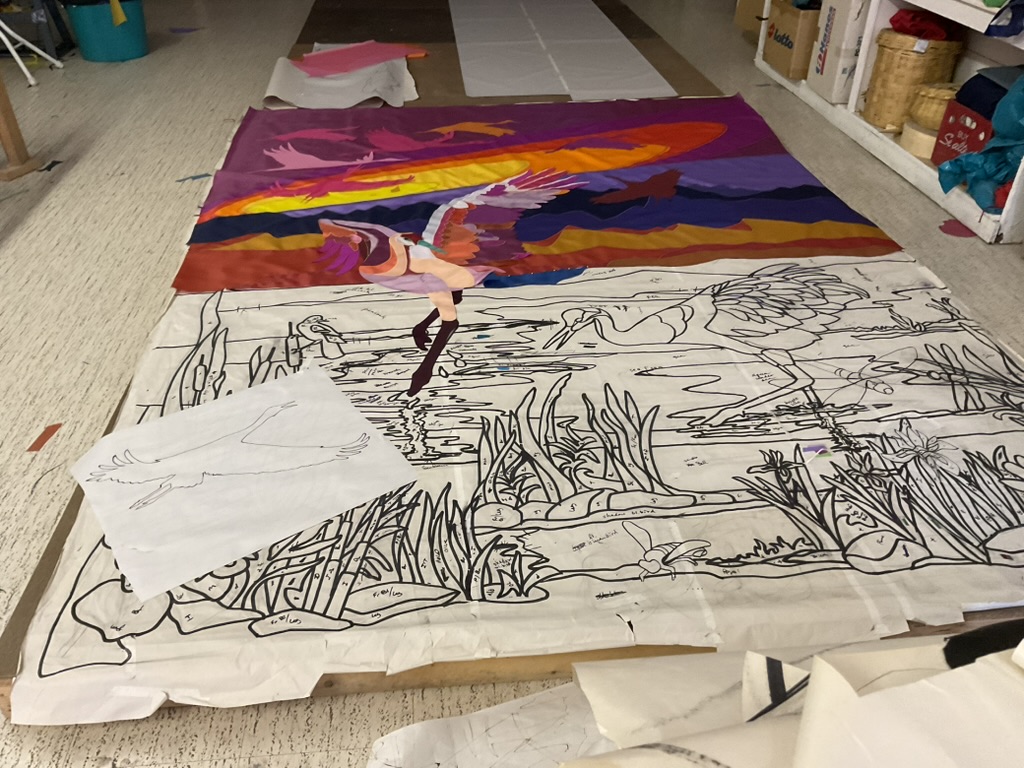
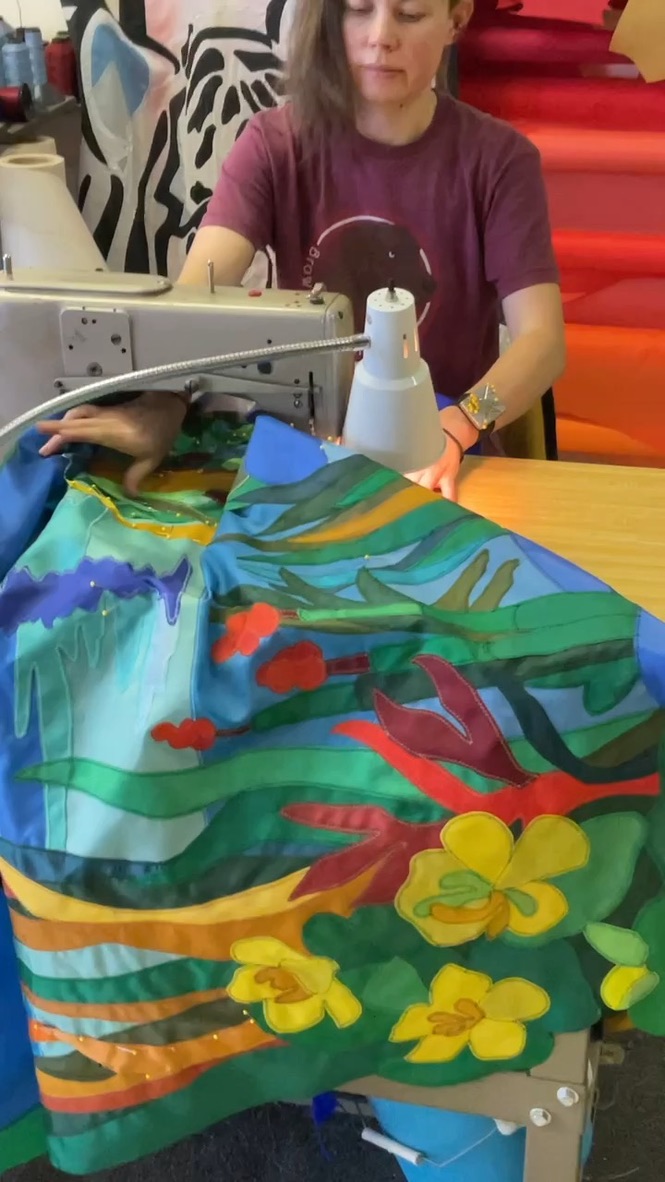
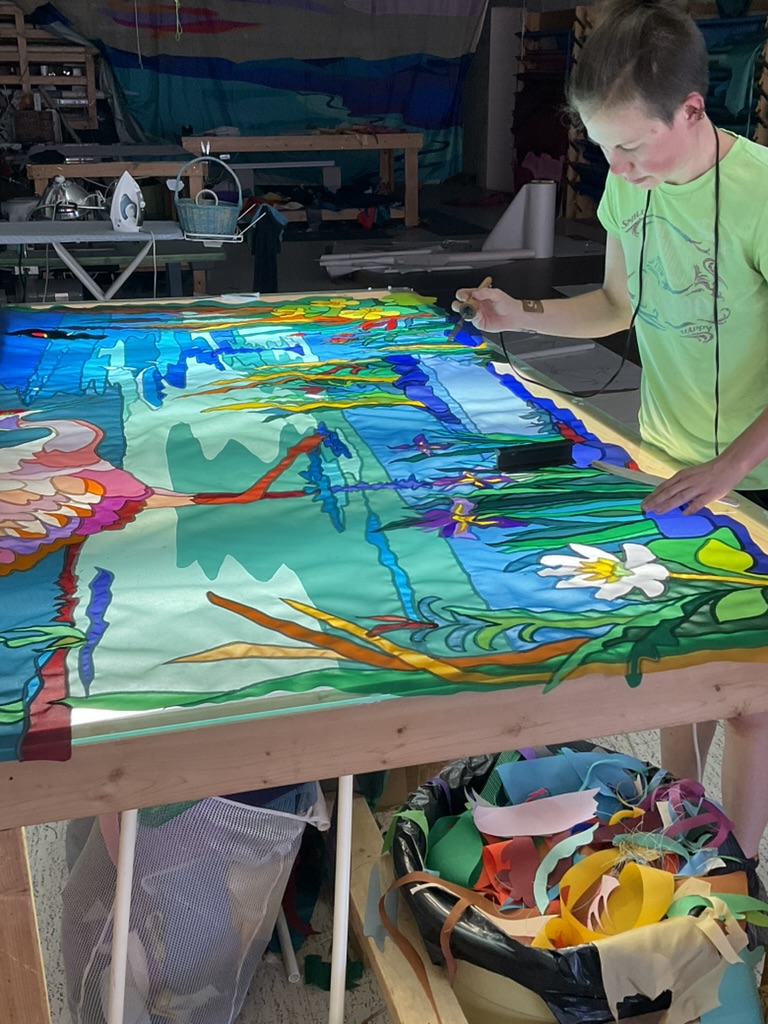
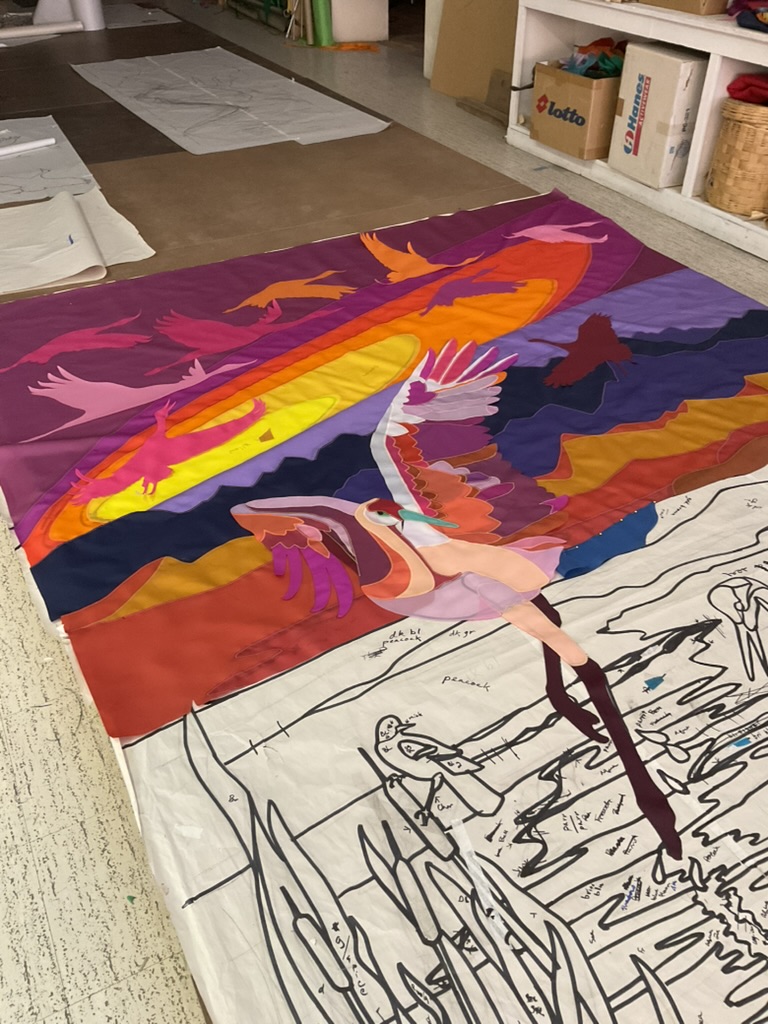
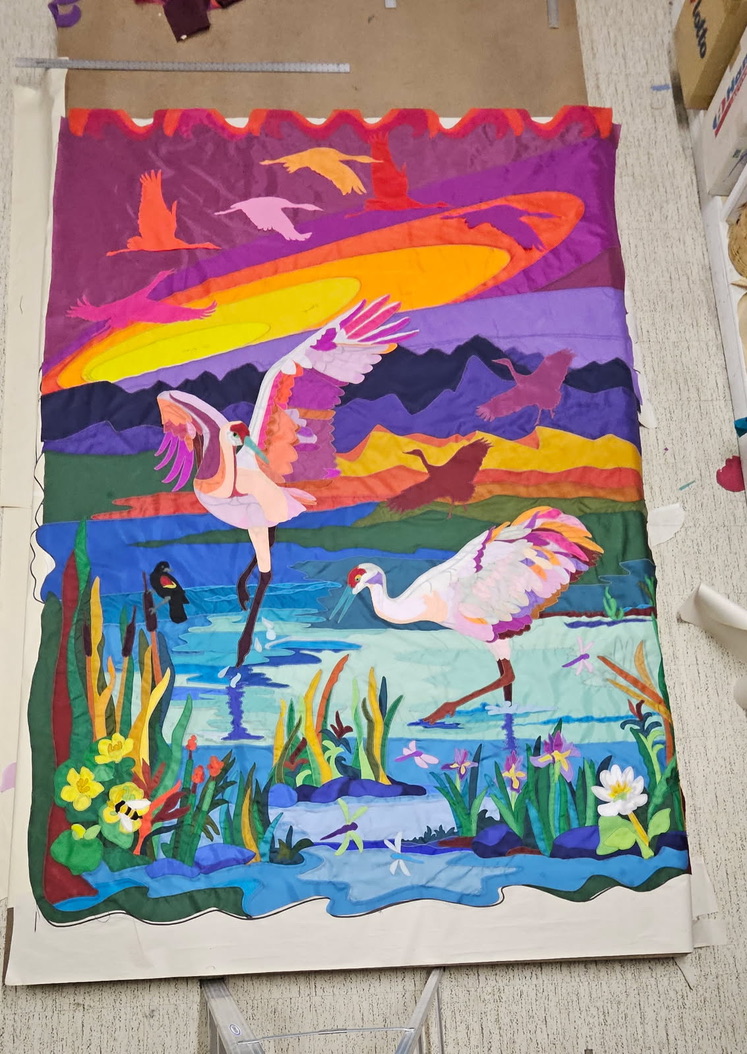
I begin with drawings that become patterns which are enlarged to full size. Some of our works are very
large, so the making of them becomes physical. We are working with yards and yards of cloth, moving
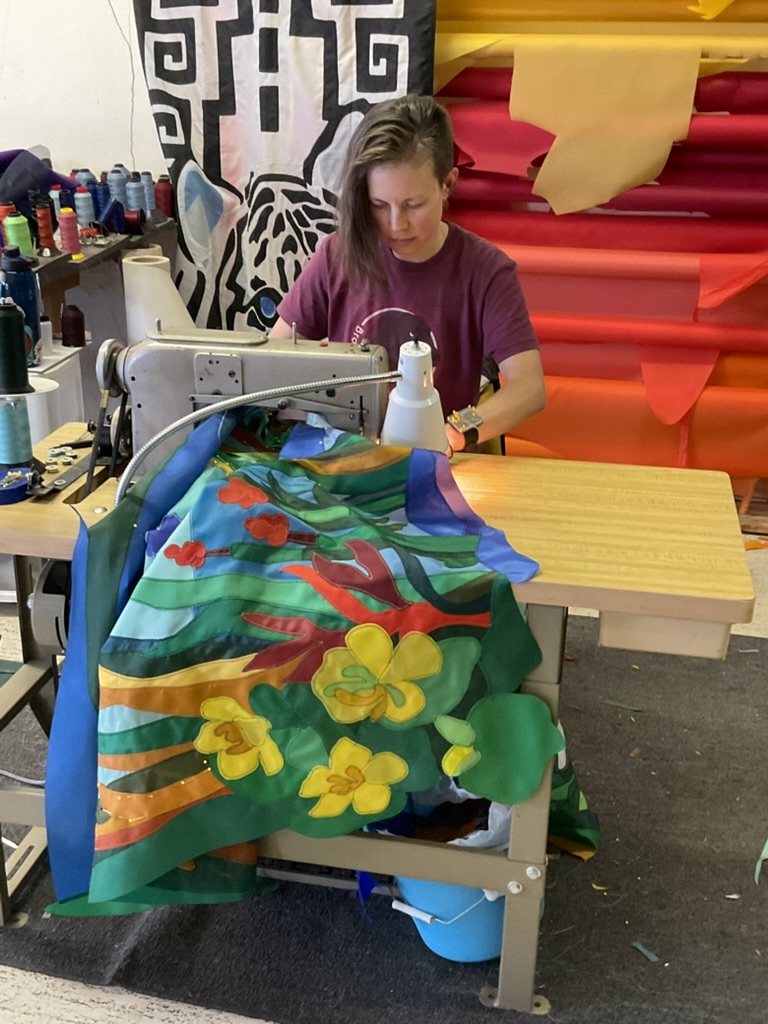
around the tables, cutting, assembling and sewing one section at a time.
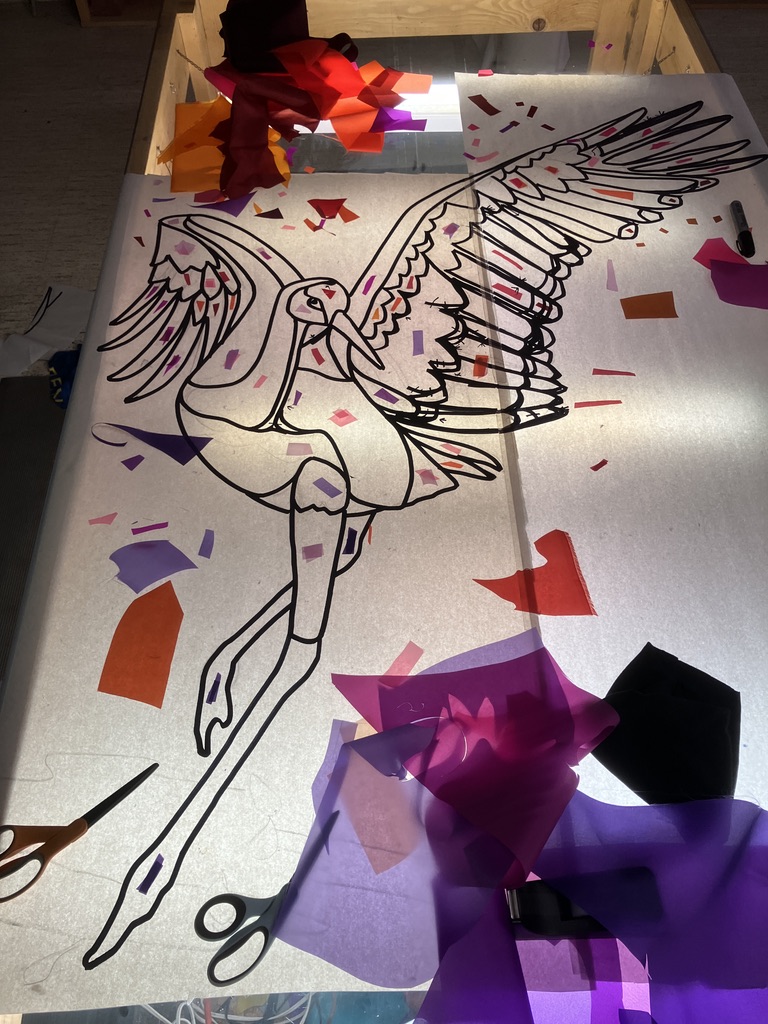
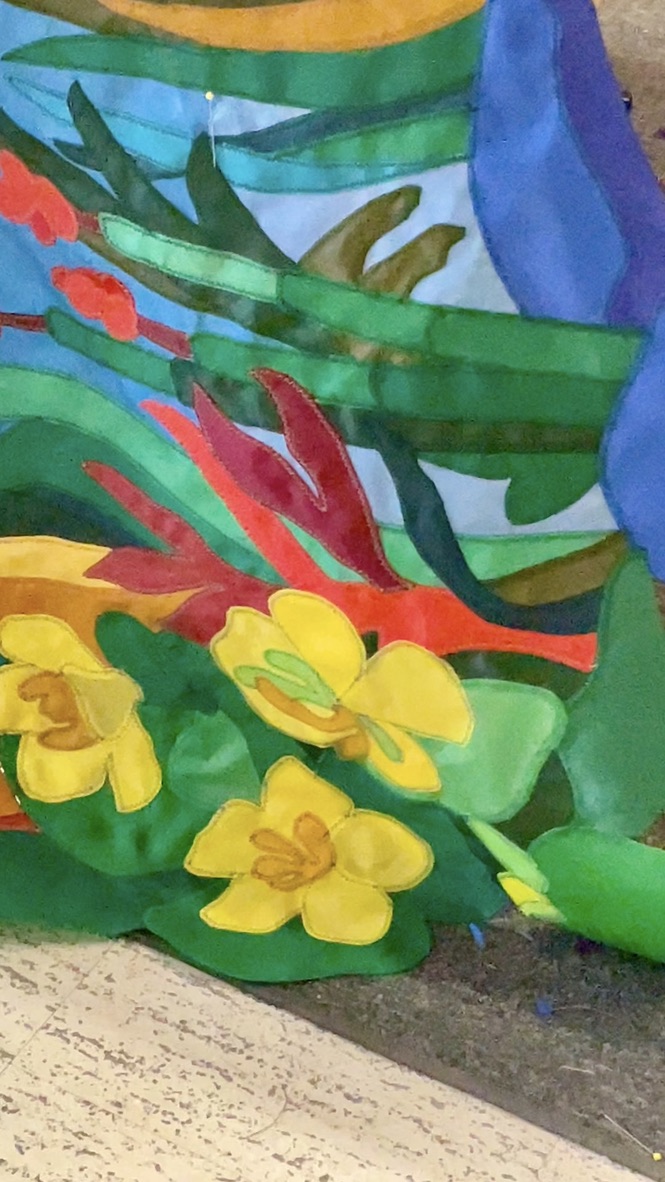
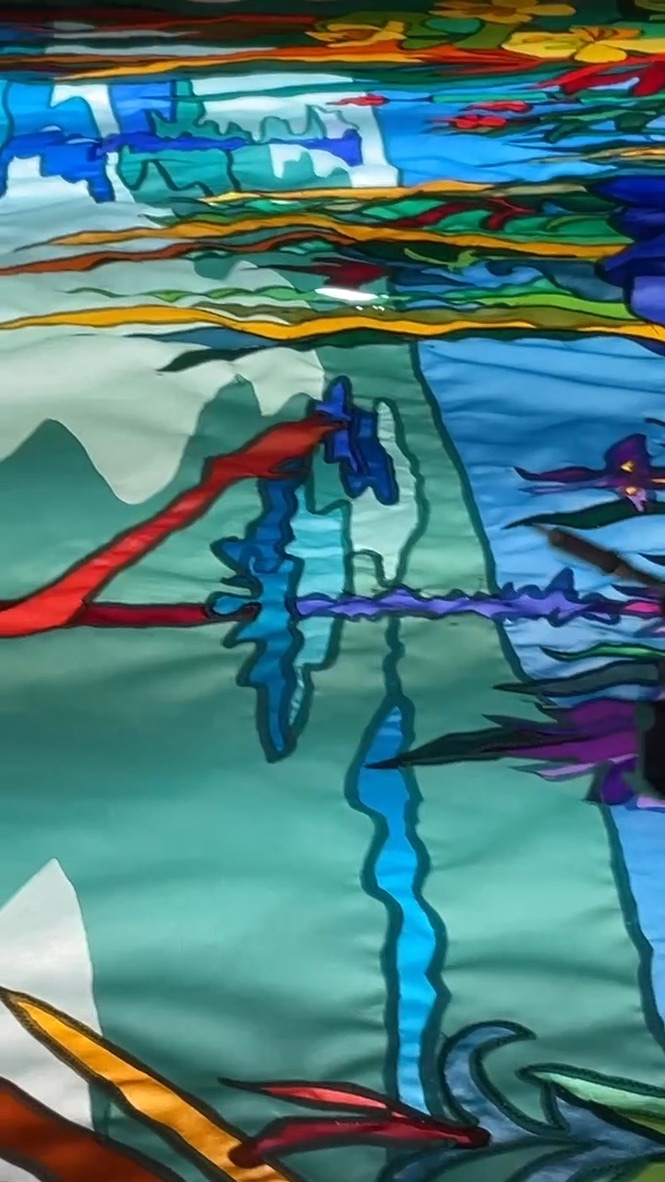
The fabric I use is a lightweight translucent woven nylon that has been part of my work for decades. I
love it because the pure colors are luminous, and when one color is layered over another, an entirely new
color can appear. It gives me a palette that is constantly changing with the light.
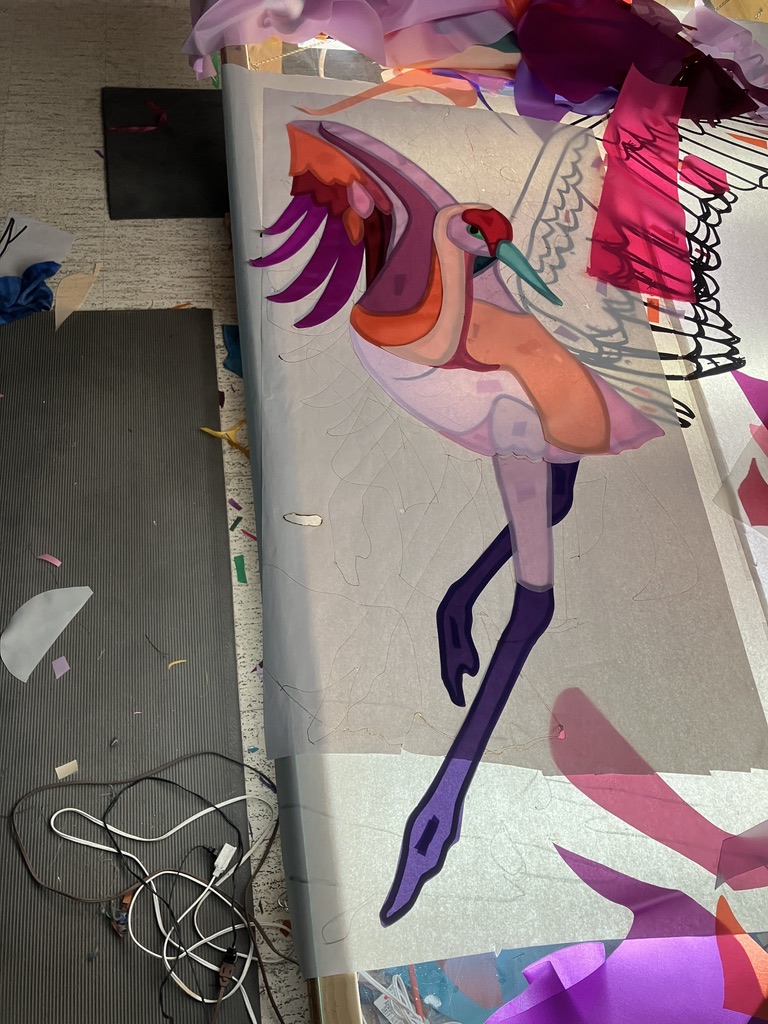
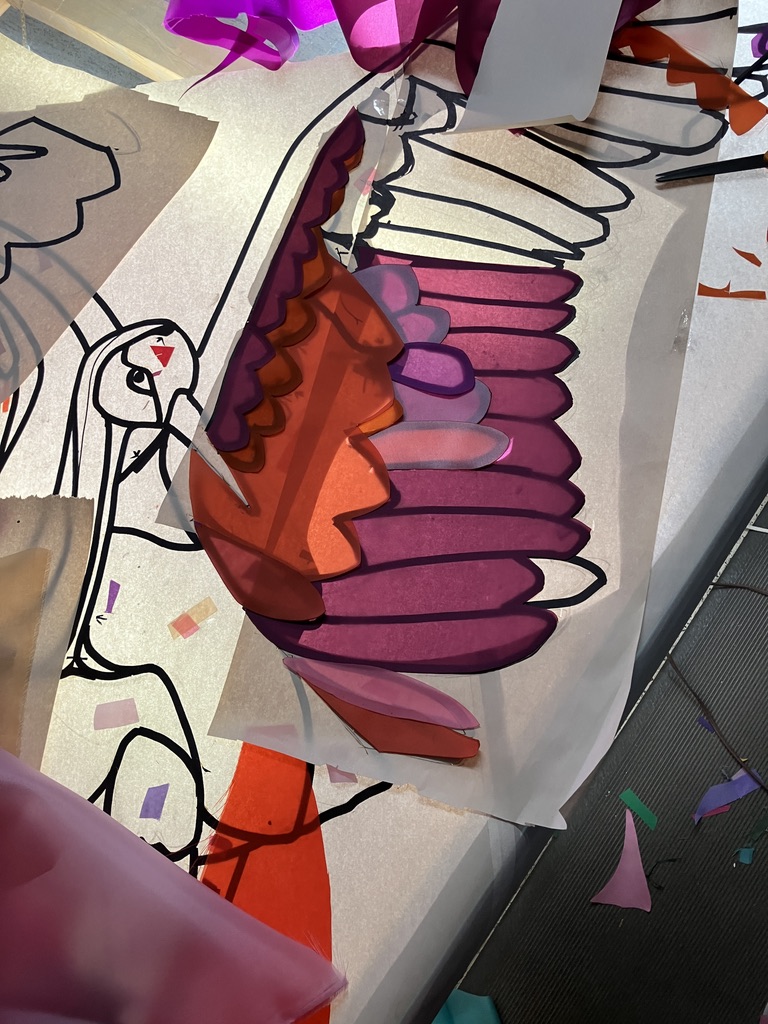
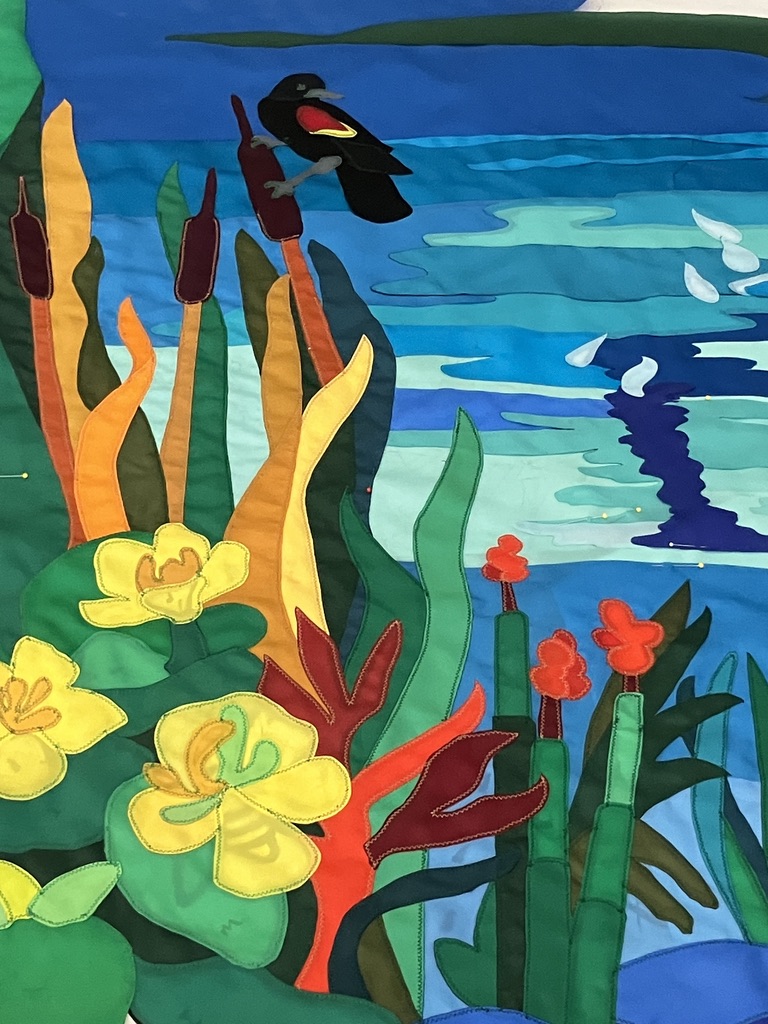
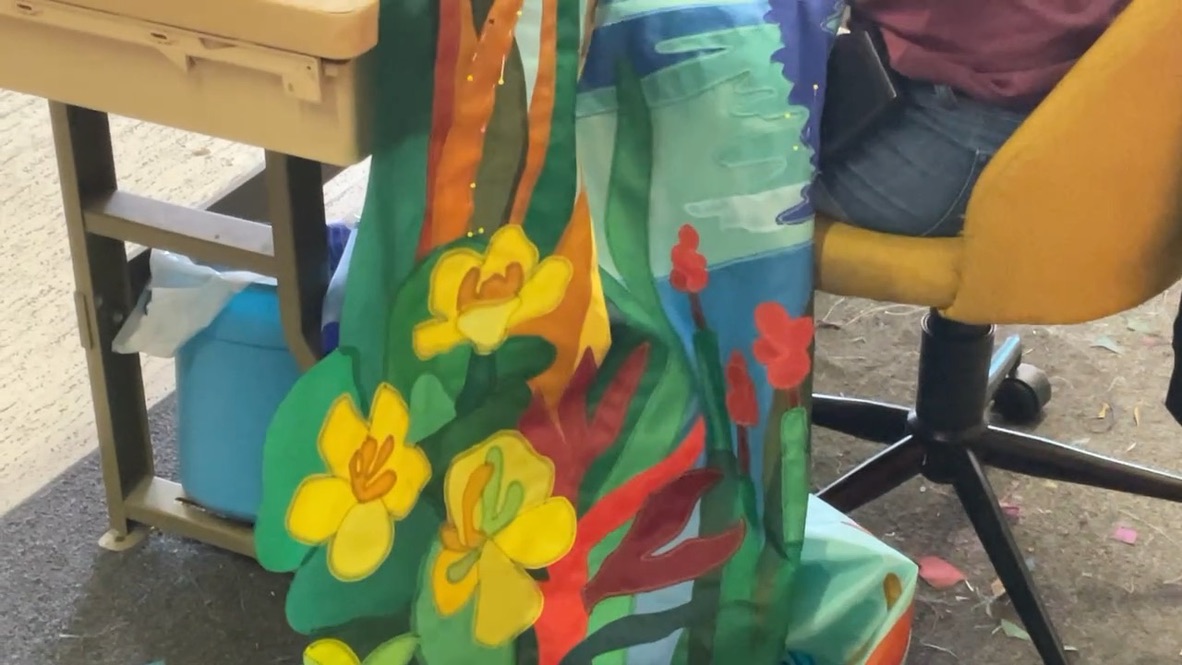
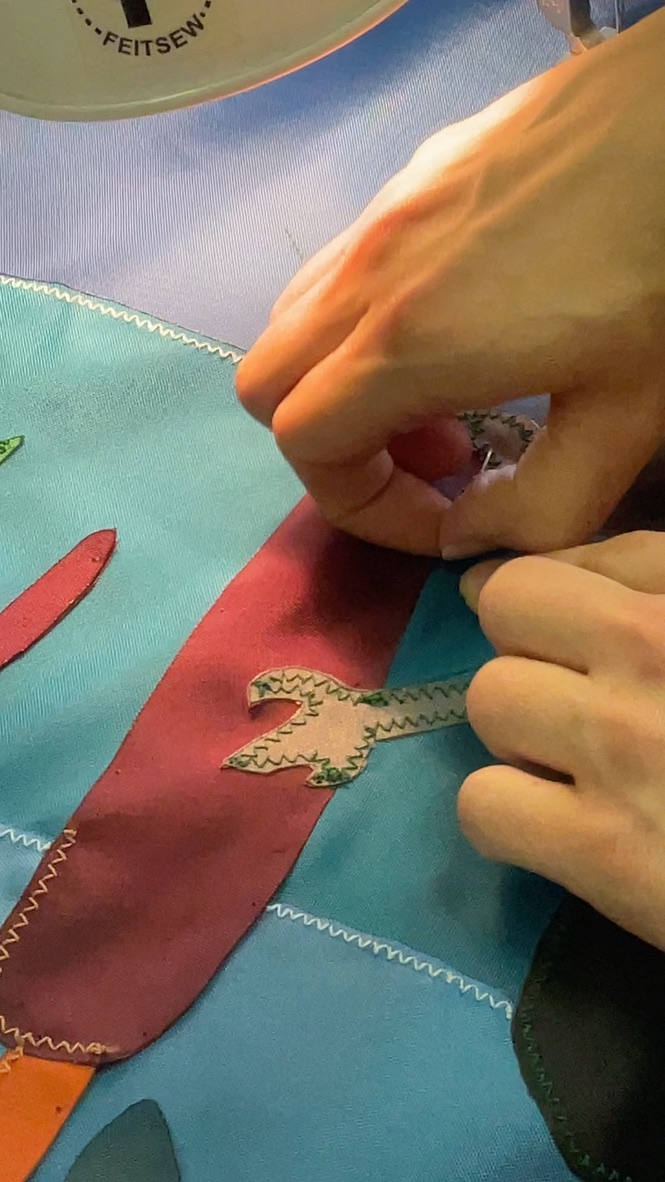
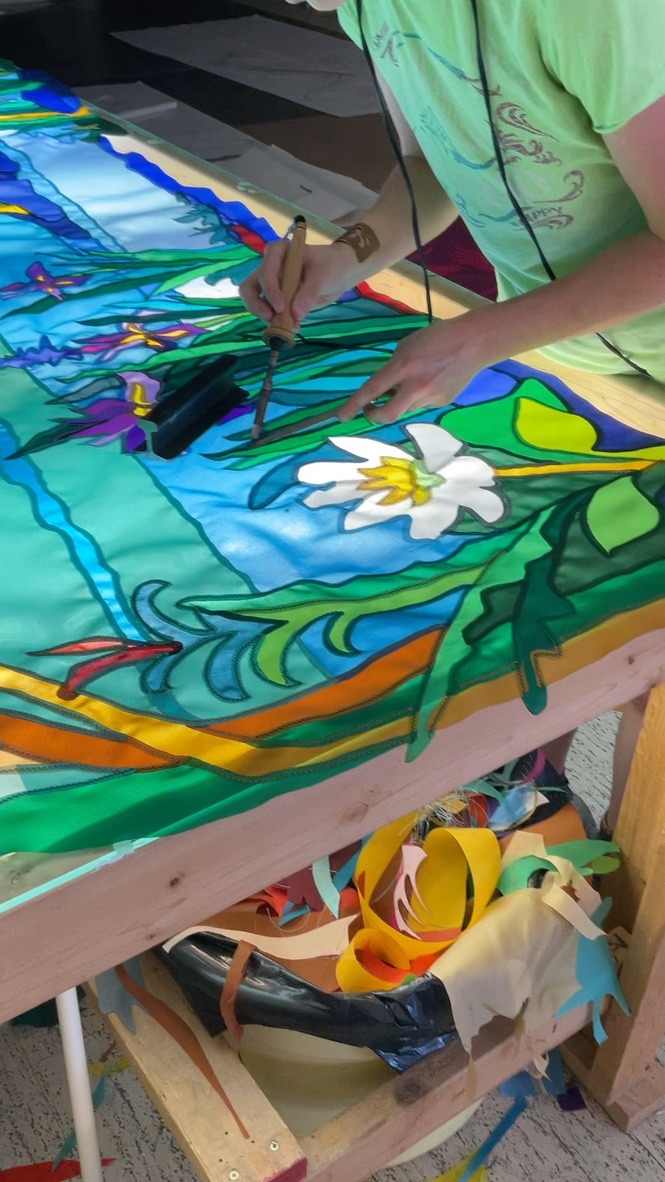
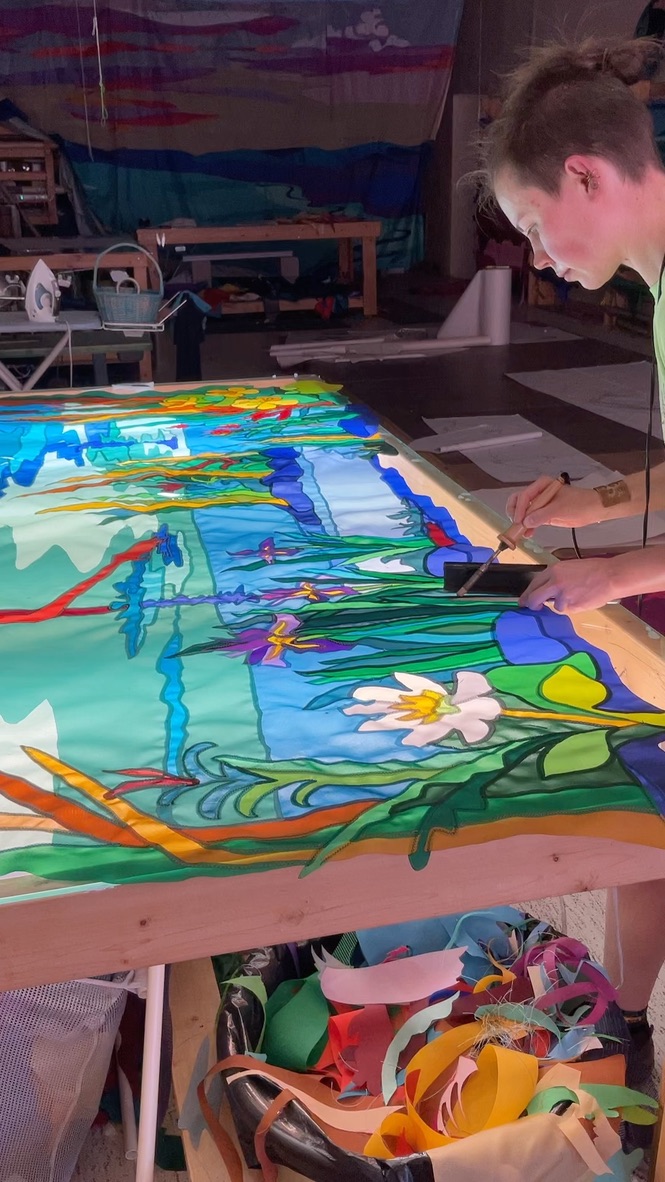
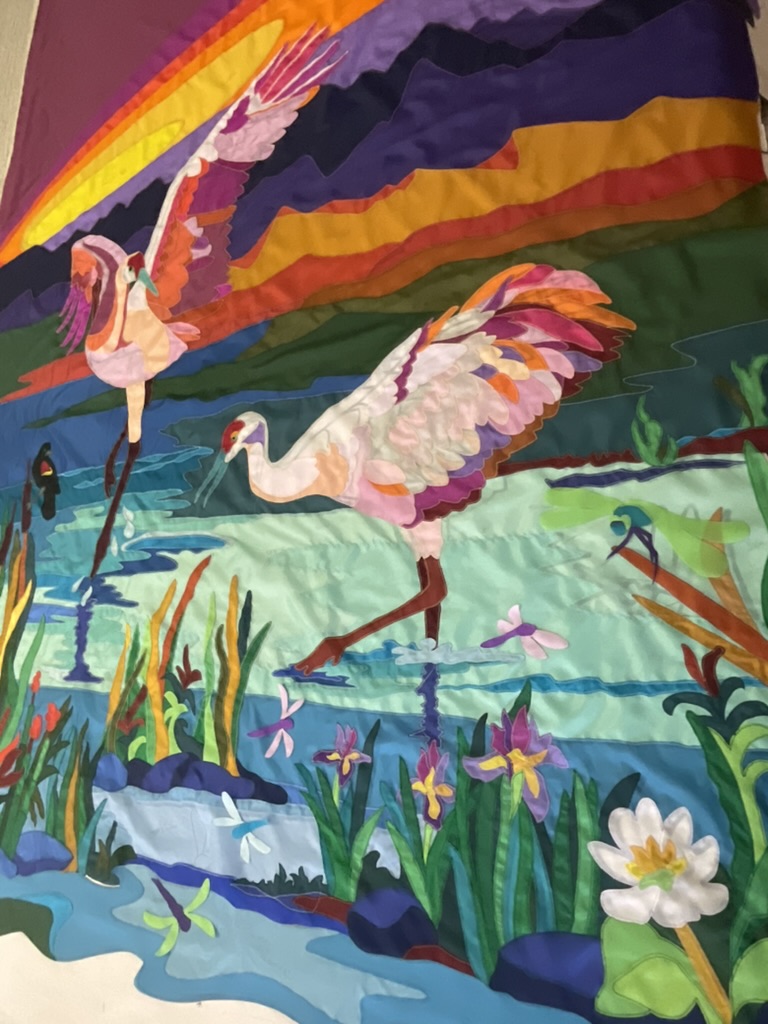
I developed my own version of a traditional border-appliqué technique. The individual pieces of fabric
are cut with a hot knife, which seals the edges, then they are pieced together to make the design and sewn
along a narrow border between the pieces with a zigzag stitch. There is no paint, no ink, no printing, just
the color infused into the cloth itself.
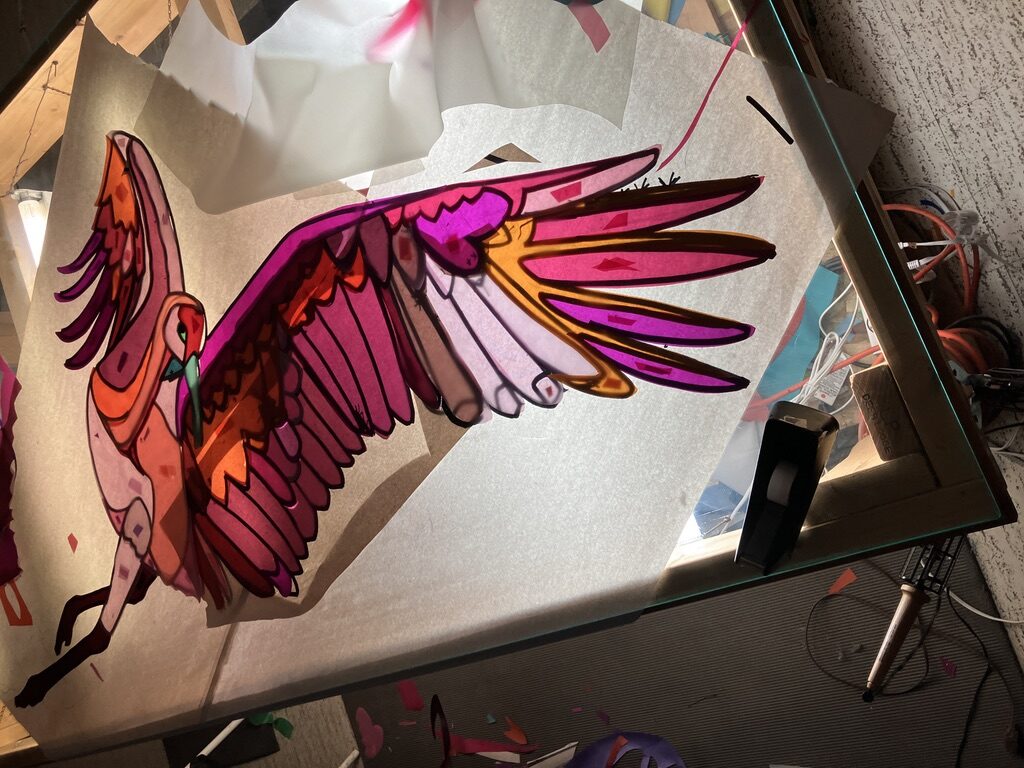
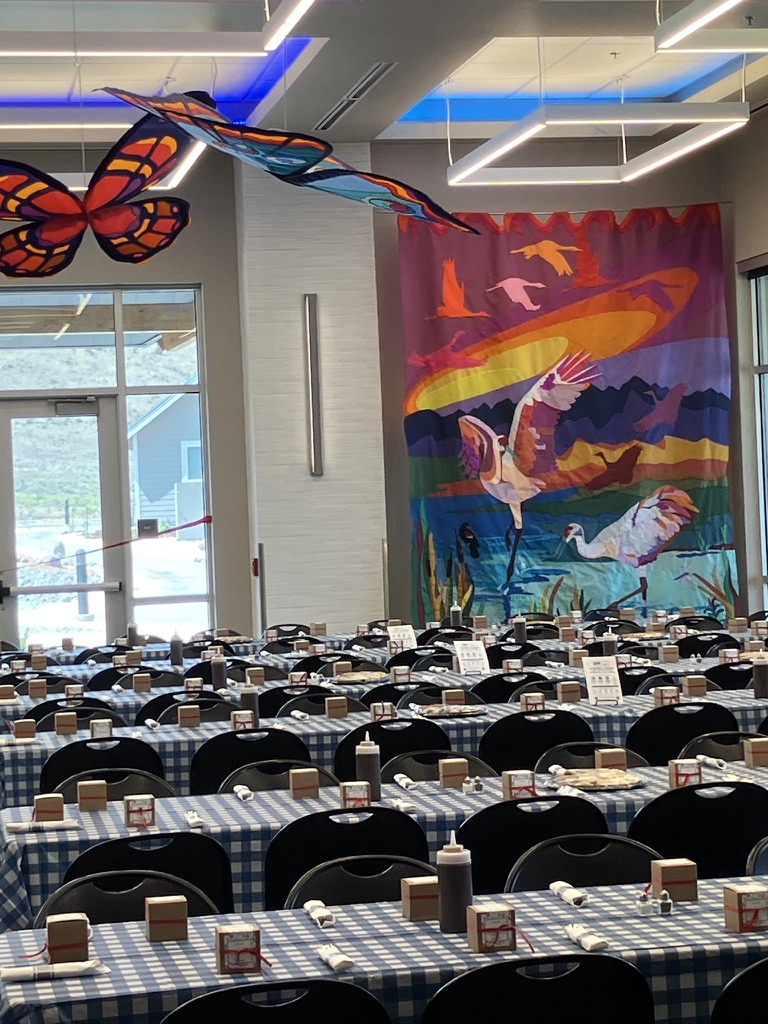
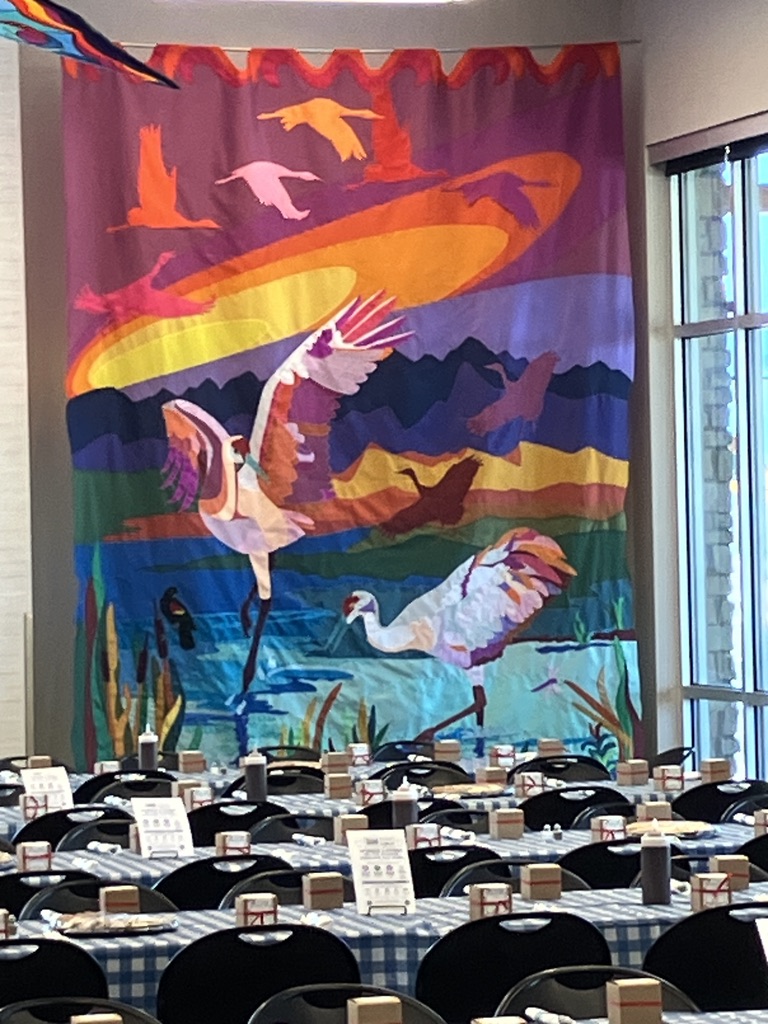
Once the sewing is finished, the tapestry of the art can be stretched, suspended or attached to
structures that either I design for the piece or are already in place. Some works hang freely. Others are
balanced like mobiles. Some are backlighted. The large installations respond to the slightest air currents,
and appear differently from one moment to the next. Movement is another character of the art.
Fabric has a humanity to it. It folds, breathes and responds. Light gives it luminosity, and air brings it to
life. After all these years, I am still fascinated by what happens when those three things—fabric, light and
movement—come together in a large architectural space.
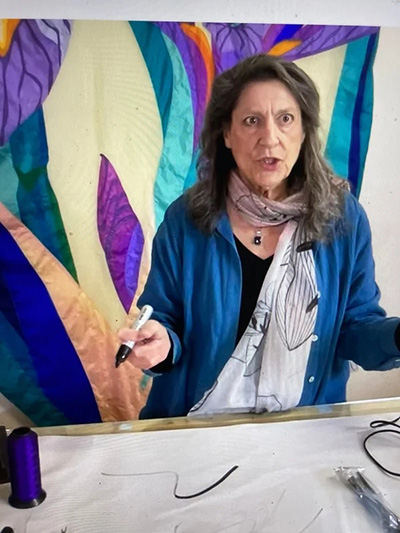
The making of a translucent tapestry
Process Photos